My Middle School BFF (that’s Best Friend Forever, young ’uns—‘BFF’ was the Olden Days term before we had ‘bestie’) and I hung out almost every day for the three years we lived in walking distance of each other. Years later, we would each come out as both bisexual and on the asexual spectrum, but at the time we had no idea. Well, she sort of knew she might like girls; I was utterly oblivious.
If any food encapsulates the experience of our early friendship, it’s Pillsbury Shape Sugar Cookie Dough. Of course we didn’t only eat cookie dough, but I don’t remember a single thing we ate during those years besides this one. It’s usually only available around the major holidays, and only at certain stores. (And no, regular Pillsbury sugar cookie dough does not taste the same, thankyouverymuch.)
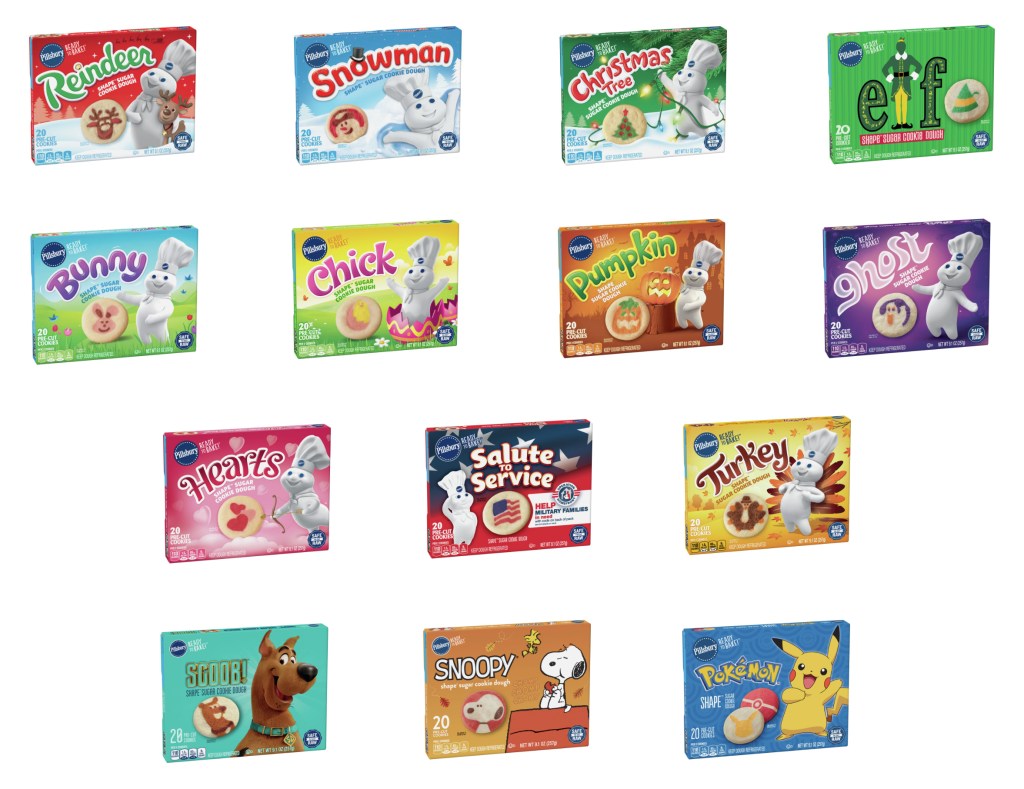
At some point, Pillsbury realized that they could make a lot more money from this enterprise by selling the dough in packages of pre-sliced cookie dough portions. Back in My Day, it came as one long tube of dough that you got to slice yourself—which was half the fun of it anyway, seeing how the picture got warped by cutting at different angles or with different knives.
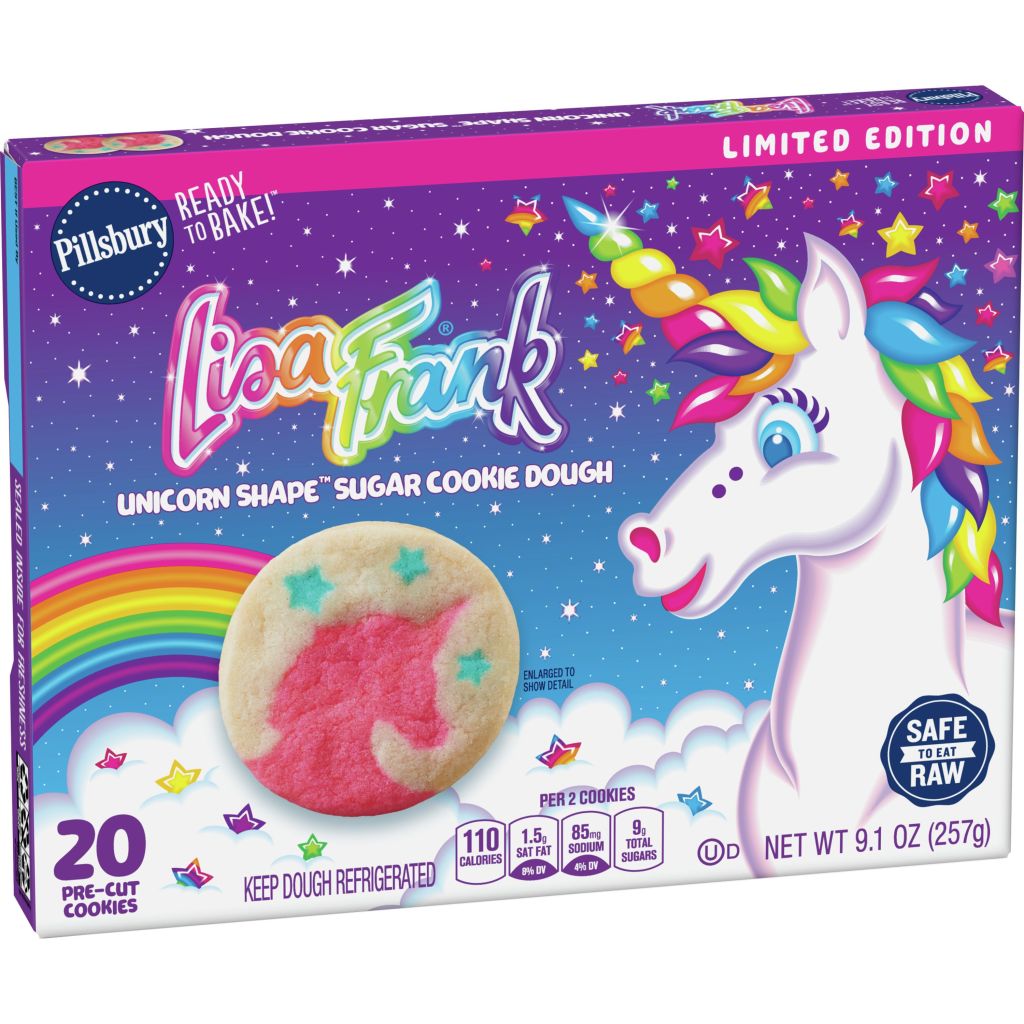
I still buy it when I’m feeling nostalgic and eat it raw—a forbidden treat as kids, and my dang right as an adult; nowadays they’ve actually made it safe to eat raw, since they know people are gonna do it anyway. And when they released the limited edition Lisa Frank cookie dough with unicorn and star shapes, that was the pinnacle of nostalgia for me.
I first heard the podcast episode: “The Search for the Queerest Food” by America’s Test Kitchen’s podcast, Proof, as a feed drop on the podcast Rebel Eater’s Club (who I’d rather give the clicks to). As reporter Chad Chenail interviewed people in his search for the queerest food, he created “The Queer Food Rubric, or Foodbric.” Mine certainly seemed to tick all the boxes:
1. Is it a metaphor?
In our formative years, this cookie dough was something you had to DIY, but there were very basic instructions that you could either follow or ignore. It had a touch of the Forbidden about it. It was colorful and sweet. And yes, it was mass produced for mass appeal; nowadays even more so (#RainbowCapitalism).
2. Is it a food?
I personally think Mr. Chenail is wrong and iced coffee is a food. I know that’s debatable, but this cookie dough is unquestionably a food. OK, some people might call it an “edible food-based product,” but this is the point where I would politely ask those people to take a look at the anti-diet movement (and especially the amazing podcast Maintenance Phase).
3. Does it describe a shared queer experience?
As Chad said about pasta, “The transformation of it, the slow absorption of your surroundings to really ‘cook’ and become what you’re meant to be…” It took Middle School BFF and I years to put the pieces together. She came out to me as bi in her first year of college in the early aughts. I came out as bi and demisexual when I was in college as well, but I was 31. I actually found that original “Hey, am I queer?” post I made in a small Facebook group in 2017, tearing up at the amazingly supportive comments. I laughed when I saw myself asking “Is queerness a spectrum?”—oh 2017 Me, you sweet summer child.
4. Is there love?
Chad Chenail again:
There is this idea within the queer community about chosen family. Many queer people aren’t born into understanding and accepting families, and so a lot of queer people need to seek out that kindness, community, and family elsewhere. I see a lot of this idea in baking. Baking is, in many ways, an act of care—you often share what you’ve made with other people, right?—you make batches of cookies, cupcakes by the dozen, you’re not ‘supposed’ to eat an entire cake by yourself, or so I’m told. Somewhere on my queer foodbric, there’s a line about care, about kindness, about showing each other love.
If anyone is chosen family, it’s this woman. We drifted over the years, not through conflict, but through physical distance, time, and just Life. But we always reconnected. We always remembered there was something unique there worth holding on to, something stronger than the nostalgia of repeating 20-year-old in-jokes. We keep choosing, again and again, to keep each other in our lives.
5. Is it “cusp-y”?
As Chenail said, “To me, the word queer, in all of its enormity, is really celebrating this hybrid, outside of more traditional and conventional spaces.” This food exists somewhere in the liminal space between childhood and adulthood, between who I was (and still am) and all that I had yet to become.
The eventual answer Chad came to was that there isn’t one Queerest Food—it’s different for everyone! It’s not the queerest food, it’s your queerest food. To me, this cookie dough taste like being twelve years old and safe and seen—and cluelessly queer. It tastes like seeing the history of my life like a museum exhibit: untouchable, looking through glass, with brochures and artist statements and knowledgeable docents to help me understand.
To be continued in part 2: An Apology to Steve from Blue’s Clues.
 Beth Anna Cook